Monday, 30 April 2018

Fernand Léger

Fig. 1 Fernand Léger, Les Loisirs-Hommage à Louis David, 1948 – 1949, Huile sur toile, 154 x 185 cm, Achat de l’Etat, 1950, Attribution, 1950, numéro d’inventaire : AM 2992 BIS P, Collection Centre Pompidou, Paris - Musée national d’art moderne - Centre de création industrielle, © Centre Pompidou, MNAM-CCI/Jean-François Tomasian/Dist. RMN-GP, © SABAM Belgium 2018


BOZAR in Brussels, Belgium is hosting a major retrospective of the early 20th century French painter Fernand Léger. Displaying some 100 works and a wide array of archival documents, the exhibition offers a broad examination of the artist whose ambitious and experimental achievements in art and design left a diverse collection of not just paintings, but also prints, pottery, stage sets, films and architecture.

Beyond Cubism

Alongside Picasso and Braque, Léger is regarded as a cubist painter but once he departed from cubist style, he developed his own form characterized by thick contour lines, simple forms, and clear-cut colors. Les Loisirs-Hommage à Louis David (fig. 1) seems prescient of pop art with its use of just a few primary colors and clear-cut outlines. It depicts ordinary people cycling and picking flowers, enjoying the countryside.

The Harmony of Machine Civilization and Humanity
An architectural draftsman before becoming a painter, Léger was well-versed in architecture and had close ties with his contemporary architects such as Le Corbusier. He painted murals on their structures and also incorporated buildings and construction materials such as steel and pipes into his works. His paintings of heavy machinery used to build skyscrapers, and the workers were expressions of Léger’s ideals of the harmony between modern machine civilization and humanity. The exhibition showcases Léger’s consistent view of his ideal world with works ranging from the early 1924 experimental Ballet Mécanique, which portrays dancing machines through a collage of people and machinery, to his late masterpiece painting Les Constructeurs – definitive which depicts the inhuman steel and the workers.

Fernand Léger Until 3 June 2018


BOZAR – Centre for Fine Arts
Rue Ravensteinstraat 23
1000 Brussels
Belgium
+32 (0)2 507 82 00
https://www.bozar.be/en
Opening times:
Tue, Wed, Fri-Sun 10:00-18:00
Thur 10:00—22:00
Closed Monday, 25 December, 1 January

Thursday, 29 March 2018

Charles I: King and Collector


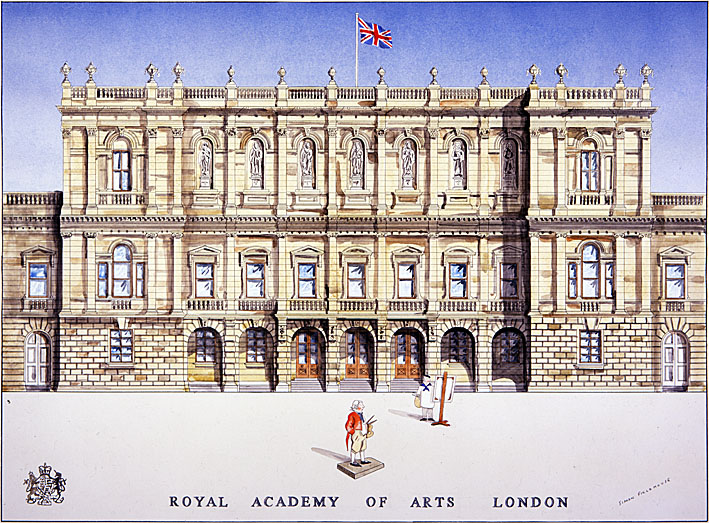
Charles I, the 17th century King of England, was also a world famous art collector of the times. His collection comprised some 1,500 paintings and 500 sculptures, including many pieces by Titian, Holbein, Dürer, Rubens and Van Dyck. The collection was sold following the execution of Charles during the Puritan revolution. Some works were bought back during the Restoration, but many remain dispersed around the world including those in the Musée du Louvre and the Museo Nacional del Prado. Charles I: King and Collector, currently on view at the Royal Academy of Arts in London, will exhibit 150 items from the original collection, including many that will be making a “homecoming” for the first time.

Charles I Portrayed by Van Dyck
At the core of the exhibition are portraits by Anthony van Dyck. Van Dyck excelled in capturing a sense of refinement in his paintings. He formulated a new style of portraits of aristocrats, depicting them with elegance and ease in a relaxed atmosphere. Van Dyck spent the latter part of his life employed in the court of Charles I and painted forty portraits of the king. This exhibition includes Charles I and Henrietta Maria with Prince Charles and Princess Mary, the two equestrian portraits Charles I on Horseback with M. de St. Antoine and Charles I on Horseback. The most impressive portrait is Charles I (fig. 1). Just dismounted from his horse for a break after strolling the countryside, Charles appears relaxed as he gazes toward us. He comes across as an amicable character with an expression that suggests both refinement and ease rather than as a king replete with dignity.

The Fostering of Art in England by the Royal Collection
The works of Mantegna, Titian and Rubens that were coveted and collected by Charles I sparked the creative aspirations of their contemporary artists in England and inspired them to create their own many masterpieces. A survey of the collection of Charles I provides an opportunity to see the spirited art scene of 17th century England.

Charles I: King and Collector Until 15 April 2018


Royal Academy of Arts
Burlington House, Piccadilly,
London, W1J 0BD
The United Kingdom
+44 (0) 20 7300 8090
https://www.royalacademy.org.uk/
Opening times:
Mon-Thur, Sat, Sun 10:00-18:00
Fri       10:00—22:00
Open daily

Tuesday, 20 February 2018

Masked Warriors. Battle State of the Samurai


The exhibition “Masked Warriors. Battle State of the Samurai” will be on view at the Japan Museum SieboldHuis in Leiden, the Netherlands, until May 27. The show examines Nō masks as a key to reveal the ties between Nō and the samurai culture.

Upon entering the exhibition room, a resplendent karaori brocade Nō costume and male and female Nō masks come into view. On the right wall are two gorgeous women’s kimonos and a mask of a smiling young female. Across the way is a kimono of indigo material and gold thread with a lightning and crane design, a Nō mask with a powerful crescent moon design that extolls a god of war, and a mask of an old man characterized by deep wrinkles with transplanted hair and a mustache. Beyond the wall of the Nō costumes is a majestic display of two sets of armor. Fabric from kimono are used in the thigh guards of the armor, while the mask portions embedded into the helmets exude the strength of the crescent moon design of a samurai helmet. One can almost hear a brazen, bold call from the open mouths.

Fig.2 Helm en masker, Ressei-men (suji kabuto),
privécollectie
Nō and the Samurai Culture
In the 14th century Yoshimitsu Ashikaga, Shogun of the Muromachi Shogunate, began patronizing the Nō actors Kan’ami and Zeami, and a strong bond between Nō and the samurai culture developed. The ties were further strengthened with the succession of powerful leaders all of whom favored Nō; Nobunaga Oda, Hideyoshi Toyotomi and Ieyasu Tokugawa,. Facial armor (ventails and cheek guards) were created in such an environment. The facial armor protected the face, especially the cheeks and chin, but also had the frightening expressions of the tormented female Nō mask.

The Overwhelming Popularity of Resseimen Masks among the Samurai
In the latter half of the 16th century, the resseimen, masks with fierce expressions, became popular among the samurai. They were characterized by finely carved furrows and often had transplanted beards and brows (fig. 2). They were influenced by the akujo masks of Nō plays. Akujo were the powerful and fearsome masks of old men that expressed overwhelming offensive power and supernatural strength, and were used to represent old gods and vengeful spirits. The resseimen with intense expressions such as those of the Nio guardian gods threatened their enemies with such expressions and also had the function of rousing the fighting spirit of their wear.


Masked Warriors. Battle Stage of the Samurai: Until May 27 2018

Japanmuseum SieboldHuis
Rapenburg 19
2311 GE Leiden
The Netherlands
http://www.sieboldhuis.org/ja/

Opening times:
Tuesday-Sunday 10:00-17:00
Closed on Mondays and public holidays

Modigliani


Fig.1 Amedeo Modigliani, Nude, 1917, Private Collection
After a decadent life seeped in drugs and alcohol, the painter Modigliani died at the young age of 35. The Tate Modern is holding a retrospective that includes 100 of his works until April 2, 2018.

A Sculptor’s Approach
The most famous work by Modigliani is his nudes (fig. 1). In a simplified form, the women exude a sad and sultry beauty. Modigliani cultivated this style when he worked in sculpture before he gave up that art form due to poor health arising from poverty. From 1909 to 1916, Modigliani intermittently created pieces influenced by Greek sculptures from the Archaic Period and African masks. When his focus returned to painting, he incorporated lines that looked like they had been carved with a chisel.

Fig.2 Amedeo Modigliani, The Little Peasant,
c.1918 ©Tate
The Avant-garde Painter Modigliani
Modigliani’s 1916 to 1917 nude women series can be viewed as his ambitious endeavor of this period. He joined exhibitions alongside artists such as Pablo Picasso, Moise Kisling and Giorgio de Chirico, at the same time garnering attention as one of the avant-garde painters of the era. He held the only solo exhibition during his lifetime “Paintings and Drawings of Modigliani” at the Galerie Berthe Weill. But on the opening day, police demanded the removal of a nude displayed in the window on grounds that it was obscene. There was virtually no response from critics.

Amid the Gentle Light of the Southern France
In 1918, fleeing World War I battles and the Spanish flu, Modigliani followed the art dealer Zborowski to Nice. The farmers he met in Southern France depicted in The Little Peasant (fig. 2) reveal a sense of simplicity and peace unseen before in his works. The harmony of beautiful lines and translucent bright colors brought a unique spirituality to his paintings. The longing for tranquility and tradition was a stance shared widely by Picasso and other avant-garde artists, but for Modigliani, it was due to the Sienese School and 13th and 14th century Italian art that had captured his heart as a youth.

MODIGLIANI : Until 2 April 2018

Tate Modern
Bankside
London SE1 9TG
United Kingdom
www.tate.org.uk/visit/tate-modern

Opening times:
Sunday to Thursday 10.00–18.00
Friday to Saturday 10.00–22.00
Open daily

Friday, 1 December 2017

Reflections: Van Eyck and the Pre-Raphaelites


Fig.1 Jan van Eyck, Portrait of Giovanni (?) Arnolfini 
and his Wife and ‘The Arnolfini Portrait’,1434, Oil on oak,
82.2 x 60 cm, National Gallery, London
© The National Gallery, London
The exhibition “Reflections: Van Eyck and the Pre-Raphaelites” at The National Gallery in London highlights the influence that Van Eyck and his use of mirrors had on the Pre-Raphaelites.

The Pre-Raphaelites and Van Eyck
Van Eyck’s 15th century Portrait of Arnolfini and His Wife (fig. 1) inspired the 19th century English painters William Holman Hunt, John Everett Millais and Dante Gabriel Rosetti to form the society of the Pre-Raphaelites. These artists aspired to capture the sincerity and spirituality they saw in pre-Raphael Italian and Flemish art, and they held as their ideal Van Eyck’s Arnolfini Portrait.

The Unexpected World Inside the Picture
From Van Eyck, they observed many lessons including the use of deep and rich colors and the depictions of scenes with elaborate texture. They were most enamored by the presentation of another distinct universe within a picture through the use of a mirror, as seen in the Arnolfini Portrait. In the round mirror in the background, Van Eyck inserts his own image, demonstrating that the painter himself was present as a witness to the wedding of the couple.

Fig.2 William Holman Hunt, The Awakening Conscience,
1853, Oil on canvas, 76.2 x 55.9 cm
© Tate, London (T02075)
Captivated by the Mirror
Many of the Pre-Raphaelites painted interiors that included a mirror. Hunt’s The Awakening Conscience (fig. 2) contains a large mirror reflecting a garden. The woman who was sitting on the lap of her lover sees the garden up ahead, and her conscience is suddenly awakened. The painting captures the moment when she rises to stand and attempt to escape her degenerating life. The mirror also plays an important role in the story of Lady Shalott from the Arthurian legend that was a favorite theme of the Pre-Raphaelites. A curse on the Lady of Shalott deems that she will die if she looks directly outside, so she can only view the outer world through a mirror. In John William Waterhouse’s painting, the mirror that reflects the outside has a large crack in it, alluding to the fate of death that awaits the Lady simply because she had wished for a glimpse of the man she loved.


“Reflections: Van Eyck and the Pre-Raphaelites” Exhibition until April 2, 2018


The National Gallery, London
Trafalgar Square
London WC2N 5DN
The United Kingdom
+44 (0)20 7747 2885

www.nationalgallery.org.uk
Opening Hours:
Daily  10:00-18:00
Friday 10:00—21:00
Closed:
1 January and 24–26 December

Wednesday, 25 October 2017

Japanese Architecture Exhibition at Centre Pompidou Metz in France


Fig.2 DumbType, S/N, Performance photo: Yoko Takatani

The Japanese architecture exhibition at Centre Pompidou Metz in France, “Japan-ness: Architecture and urbanism in Japan since 1945” is the first large-scale exhibition in Europe that surveys Japanese architectural history from postwar to present day through the works of 118 Japanese architects and artists.

Takeshi Hosaka, Restaurant Hoto Fudo,
Fujikawaguchiko, 2009© Takeshi Hosaka Architects
© Nacasa & Partners Inc. / Koji Fuji
Japan-ness
Japan-ness is a concept presented by Arata Isozaki in his 2003 book “Japan-ness in Architecture.” Isozaki defines Japan-ness as the unchanging values and reinterpretation symbolized in the periodic rebuilding of Ise Shrine. Japan-ness accepted and transformed the Western modernism that flooded into Japan, which gave rise to postwar Japanese modern architecture.

Postwar Architectural History
The exhibition displays original models of large-scale buildings by Kenzo Tange representative of their era such as the Hiroshima Peace Memorial Museum, the Yoyogi National Gymnasium built for the 1964 Tokyo Olympics and the pavilions for the Osaka Expo, as well as numerous urban planning models that never materialized. Residential plans reveal how new ideas and materials solved problems that arose from population growth and population density in urban areas.


Fig.1 Tadanori Yokoo, Motorcycle, 2002 (1966),
Peinture acrylique sur toile, 53 x 45,5 cm
Shun Kurokochi
Japanese Season: Three Exhibitions
Preceding the “Japonism 2018” cultural events that will be held in France to commemorate the 160th anniversary of diplomatic ties between the two countries, Centre Pompidou Metz in France presents “Japanese Season,” three comprehensive exhibitions introducing Japanese culture and arts. Beginning with the architecture exhibit “Japan-ness. Architecture and urbanism in Japan since 1945” which opened in September, “Japanorama. A new vision on art since 1970” introduces Japan’s modern art and visual arts from around the time of the 1970 Osaka Expo (Fig. 1), and in January of next year, “Dumb Type. Extra-Sensory Odyssey” presents for the first time in France Dumb Type, the artists who have gathered global acclaim in visual, sound and performance art (Fig 2).

Centre Pompidou Metz
1 Parvis des Droits-de-l’Homme
57020 Metz
France
http://www.centrepompidou-metz.fr/en/welcome
Opening Hours (from 1st November to 31 March):
Wednesday to Monday 10:00-18:00
Opening Hours (1st April to 31 October):
Monday, Wednesday, Thursday  10:00-18:00
Friday to Sunday 10:00-19:00
Closed:
Tuesday

Monday, 2 October 2017

A Retrospective Exhibition Celebrating the 70th Anniversary of the House of Dior

© Emma Summerton for “Christian Dior Designer of Dreams”

The Musée des Arts Décoratifs is commemorating the 70th anniversary of the House of Dior with an exhibition from July 5th to January 1st, 2018. For the first time, some 300 haute couture gowns will be brought together with fabrics from the atelier, fashion photographs and several hundred archival items, including illustrations, sketches, letters, memorandums and advertisements.

The “New Look” that Changed Fashion
Christian Dior has been a central figure of 20th century fashion since he launched the “New Look” of his 1947 spring/summer collection. A feminine silhouette comprised of an exaggerated hourglass shaped bust and waist combined with a billowing skirt characterized the “New Look.” Dior had managed to overturn the masculine fashion of strong and stoic silhouettes that dominated the era still facing the deep scars of World War II.

The Spirit of Beauty that Flows Through the House of Dior
Christian Dior was also a collector of art nouveau works, and his pieces emanate the aesthetics and designs of his gowns. Dior’s profound insights into art have been handed down to the six artistic directors who followed him: Yves Saint Laurent, Marc Bohan, Gianfranco Ferré, John Galliano, Raf Simons and today’s Maria Grazia Chiuri. By following the chronologically arranged exhibition from 1947 to 2017, visitors will witness the spirit and legacy of Christian Dior through the decades and the global distinction of the fashion house that is a symbol of France.

“Christian Dior, couturier du rêve ” Exhibition until January 7, 2018 (Closed on Mondays)

Musée des Arts décoratifs
107, rue de Rivoli
75001 Paris
France
http://www.lesartsdecoratifs.fr/en/
Opening hours:
Tue to Sun 11:00-18:00 (until 21:00 on Thursdays for Temporary Exhibitions only)
Closed:
Mondays

Monday, 21 August 2017

The New British Pottery of the 20th Century


Ewart Uncles © Bristol Culture

The Bristol Museum and Art Gallery in Bristol, the United Kingdom is showing a retrospective exhibition of 20th century British pottery.

Twentieth Century British Pottery
Fig.1 Hans Coper © Bristol Culture
In the 20th century, a ceramics industry born alongside post-industrial revolution mass production coexisted with a studio system that had a division of labor between artisans who painted and those who threw clay on wheels. In that environment arose a new trend of the individual pottery artist. These artists should be recognized as conveyors of the beauty of the combination of highly practical pottery and artistic expression.

The driving force behind this trend was Bernard Leach. In 1920, Leach returned from Japan with Shoji Hamada and created a style that fused the tradition and style of Eastern and Western, and Japanese and British ceramics. It was simple, solid and powerful pottery.
The New Shape of the New Pottery
The potters Lucie Rie from Austria and Hans Coper  (fig. 1) from Germany fled the battles of World War II and sought asylum in Britain. Both artists were influenced by the sudden spread at the time of abstract sculpture and pursued the spatial representation and figurative aspects of pottery. Their works were thin and light and gave rise to a new balancing of modulation. As mechanization allowed for high quality mass-produced goods and decreased the need for artisans to create daily commodities, the younger generation, led by Rie and Coper, experimented with new forms and expressions of pottery in their artistic quests.

“Radical Clay: Teaching with the greatest potters of the 1960s” Exhibition until June 10, 2018 (irregular closings on Mondays)

Bristol Museum & Art Gallery
Queens Rd
Bristol BS8 1RL
The United Kingdom
https://www.bristolmuseums.org.uk/bristol-museum-and-art-gallery/
Opening times:
Tue to Sun 10:00-17:00
Closed:
Dec. 25, 26. Irregular Mondays (see website)

Thursday, 3 August 2017

The Outsider Painter –– Jean Dubuffet

Fig.1 Jean Dubuffet: Personnage hilare (Portrait de Francis Ponge), 1947,
oil on plaster on cardboard, 60.5 x 45.5 cm, collection Stedelijk Museum
Amsterdam, donation of the artist

A forerunner of the art informel movement and an advocate of art brut (or raw art) who expressed a strong interest in the art of children, the mentally ill and primeval cultures, French painter Jean Dubuffet has had a major impact on the international art world. This summer two art museums in Amsterdam are simultaneously holding exhibitions on Dubuffet, a painter who is crucial in tracing the history of 20th century art.


Impasto Paintings
The Stedelijk Museum is showing Dubuffet’s paintings and lithographs from the 1950s. During this period Dubuffet was attempting to develop new textures in his paintings. He created his own unique textures by applying paints so thickly that they imparted a strong presence in themselves and then mixing in materials not normally used such as dirt, asphalt and bits of glass. In the Portrait of Francis Ponge (fig.1), Dubuffet used plaster.


Fig.2 Monument au fantôme (1969–1971) Fondation Dubuffet, Paris. ©2017
Fondation Dubuffet, Paris / Pictoright, Netherlands. Photo Johannes Schwartz
Graphic Outdoor Sculptures
Dubuffet’s works from the 1960s into the mid-1970s were often filled with patterns that are bordered with strong contour lines. His colors gradually became more organized to have a graphic effect. Around 1970 he made sculptures that looked as if they had jumped out of the patterns in his paintings (fig.2) and large-scale outdoor sculptures. Twelve of these are displayed in the Rijksmuseum Gardens.
The two exhibitions offer an opportunity to discover from various viewpoints the world of Dubuffet’s creations, built from his power of expression and unique sense of humor that broke the conventions of established art.

Jean Dubuffet –– The Deep End Until 2018, Jan. 6 (open daily)
Dubuffet in the Rijksmuseum Gardens Until 2017 Oct. 1 (open daily)


Stedelijk Museum Amsterdam
Museumplein 10
1071 DJ Amsterdam
The Netherlands
http://www.stedelijk.nl/en
Opening times:
Mon to Sun 10:00-18:00 (Friday until 10 pm)

Rijksmuseum
Museumstraat 1
1071 CJ Amsterdam
The Netherlands
https://www.rijksmuseum.nl/en/
Opening times:
Open daily 9:00-17:00

Saturday, 8 July 2017

Arp: The Poetry of Forms

Fig.1 Jean Arp, Cloud Shepherd, 1953, Kröller-Müller Museum, Otterlo,
photo: Marjon Gemmeke
Hans Arp (1886-1966) was born in Strasburg, a city where the cultures of France and Germany are intertwined. A fluent speaker of French and German, Arp started off as a poet, and went on to success as a sculptor and painter in France, Germany and Switzerland. The Kröller-Müller Museum in the Netherlands is showing some 80 works of Arp, including sculptures, paintings, poetry and other publications in the exhibition “Arp: The Poetry of Forms.” (fig.2)。

Form and Poetry
Arp’s works are characterized by the sense of affection they conjure in the viewer and their wavy lines and poetic titles as seen in Sculpture to be Lost in the Forest and Pagoda Fruit. No shepherd can be identified in his representative work Cloud Shepherd (fig.1), but its ambiguous shaping and fairy tale-like title express the world view of Arp who loved poetry and a utopian world. The rounded form of the work and the protrusions that grows out from it remind one of a living creature or a growing fruit. One can sense Arp’s compassionate view of the creations and modifications that take place in the natural world.


The Universe of Arp
Fig.2 Overview Arp: The Poetry of Forms, Kröller-Müller Museum, Otterlo,
photo: Marjon Gemmeke
World War I prompted Arp to take part in the founding of Dadaism that aimed to destroy existing values. Rejecting the machine civilization and anthropocentric thinking that gave rise to the war, Arp looked for inspiration in nature or the meaningless forms in nature. Recognizing plants, clouds, stars and all natural forms in the universe along the same lines as his works, Arp created his ideal universe through abstract and soft shapes and poetry.


Arp: The Poetry of Forms : Until Sept. 18 (Closed Mondays)


Kröller-Müller Museum
Houtkampweg 6
6731 AW Otterlo
The Netherlands
www.krollermuller.nl/visit
Opening times:
Tuesday through Sunday and national holidays* from 10:00 to 17:00. The sculpture garden is open until 16:30.
* Easter, Ascension Day, Pentecost, Christmas, King’s Day 27 April, Liberation Day 5 May
Closed   Monday and on 1 January

Saturday, 3 June 2017

Gardens exhibition


The ambitious exhibition on the theme of gardens underway at the Grand Palais offers a comprehensive look at the convergence of art and gardens by examining botanical history and the background of the art of gardens. From a Pompei fresco created in the first half of the first century to installations from contemporary artists, the exhibition presents a variety of genres over a wide period of time, including paintings, sculptures, photographs, sketches and films.

Garden of the Virgin Mary
The depiction of gardens by artists dates back to the Middle Ages. They portrayed “the enclosed garden Hortus Conclusus,” based on the Canticles from the Old Testament which attest to the virginity of Mary, as a garden of an abbey with white lilies and wild strawberries that symbolize the Virgin Mary and utilitarian plants such as medicinal herbs.

 Origins of the Botanical Garden
Illustration© Rmn-Grand Palais, Paris 2017
The “enclosed garden” underwent a major change during the Renaissance. Plants that were cultivated for practical use became objects of scientific study and were observed and collected extensively. In 1545 the first garden was created in Padua, colored by various plants discovered by explorers. Beautifully shaped and flourishing with rare plants, the garden offered new scenery for artists and stimulated their creative appetite.

Gardens Created by Artists, Gardeners and Landscape Artists
Beginning with the Pompei fresco believed to be the oldest depiction of a garden, extending to the paintings of Dürer, Monet, Cezanne and Picasso, the botanical specimens of Klee and an installation by the Japanese artist Koichi Kurita who collected soil from various locations, the fascinating exhibition allows the viewer to enjoy the diverse works related to the garden. There is also a garden created with dried samples of flower and fruit and a section that displays design plans for gardens.

Garden, until July 24 (Closed Tuesdays)


※ Curator Laurent Le Bon talks about the exhibition (Auto-translation available)
Grand Palais
3 Avenue du Général Eisenhower
75008 Paris, France
http://www.grandpalais.fr/en
Opening times:

Sun, Mon, Thu 10:00-20:00
Wed, Fri, Sat 10:00-22:00
Closed:
Tue

Tuesday, 4 April 2017

World Traveling Exhibition: Vermeer and the Masters of Genre Painting

Johannes Vermeer, The Milkmaid, ca. 1657-1658. Oil on canvas. 45.5 x 41 cm. Amsterdam,
Rijksmuseum © Amsterdam, The Rijksmuseum

The world traveling exhibition “Vermeer and the Masters of Genre Painting,” likely to be the most talked about art event of this year, has opened at the Louvre Museum in Paris. The exhibition displays 12, or about one third, of Vermeer’s works that exist today, including The Milkmaid , (fig. 1), A Woman Holding a Balance, and Allegory of Faith,. The exhibition was organized by the Louvre Museum, which owns one of the world’s leading collections of Dutch genre paintings including works by Vermeer, the National Gallery of Ireland and the National Gallery of Art in Washington. The exhibition will travel to each of these museums.

Enjoying Art in the 17th Century Dutch Republic
In the mid-17th century, the Netherlands entered an era of peak economic and cultural prosperity. Wealthy Dutch citizens bought paintings and displayed them in their homes. Friends and art lovers gathered to compare works, enjoying discussion of the characteristics and common themes and structures employed by the artists and the influences they had on each other. Vermeer’s works were also among those enjoyed in this manner.


Vermeer Amid Dutch Genre Painting
The exhibition “Vermeer and the Masters of Genre Painting” displays Vermeer’s works alongside those of his contemporaries in an attempt to reassess Vermeer in the context of Dutch genre painting. Vermeer undoubtedly left great works, but in reality he was one of many Dutch painters who escaped the world of great, traditional themes such as religion and wars to depict the likes of the daily life of a wealthy merchant by the canal. At this exhibition one can perceive how Vermeer and his rival contemporaries influenced each other in the same way that 17th century art lovers did.

Characteristics of Vermeer
A careful observation of Vermeer and his contemporaries reveals the distinctive characteristics of Vermeer. The colors used by Vermeer contain more light than the other painters and create a fresher atmosphere. Vermeer distinguishes himself from the others with his use of such colors.

Vermeer list of exhibited works, in order of creation
  1. The Milkmaid around 1657-1658 Rijksmuseum, Amsterdam
  2. Woman with a Lute around 1662-1664 Metropolitan Museum of Art, New York
  3. Woman with a Pearl Necklace1663-1664 Gemäldegalerie, Berlin
  4. A Woman Holding a Balance around 1664 National Gallery of Art, Washington
  5. A Lady Writing a Letter around 1665 National Gallery of Art, Washington
  6. The Astronomer 1668 Louvre Museum
  7. The Geographer 1669 Städelsches Kunstinstitut museum, Frankfurt
  8. The Lacemaker around 1669-1670 Louvre Museum
  9. Lady Writing a Letter with her Maid around 1670 National Gallery of Ireland
  10. Allegory of Faith around 1670-1672 Metropolitan Museum of Art, New York
  11. A Young Woman Seated at the Virginals around 1670-1672 The Leiden Collection,
    New York
  12. A Lady Seated at a Virginal around 1671-1674 National Gallery, London


Vermeer and the Masters of Genre Painting
  - 2017 Feb. 20-May 22 Louvre Museum (*Advance reservations are required for all visitors)
  - 2017 Jun. 17-Sep. 17 National Gallery of Ireland
  - 2017 Oct. 22-2018 Jan. 21 National Gallery in Washington
Simultaneously with “Vermeer and the Masters of Genre Painting,” the Louvre Museum is also showing the exhibitions “Masterpieces of the Leiden Collection – the Age of Rembrandt,” and “Drawing the Everyday Holland in the Golden Age.”

Musée du Louvre
75058 Paris
France
http://www.louvre.fr/en
Opening times:
Mon, Thu, Sat, Sun 9:00-18:00
Wed, Fri 9:00-21:45
Closed:
Tue, Jan 1, May 1, Dec 25

Saturday, 4 March 2017

Musée de L’Orangerie in Paris exhibits “Masterpieces from Bridgestone Museum of Art – The Ishibashi Foundation Collection”

Fig.1
Pierre-Auguste RENOIR, Miss Georgette Charpentier Seated,
1876, Bridgestone Museum of Art, Ishibashi Foundation
An exhibition of works from the Bridgestone Museum, known for its Ishibashi Foundation collection, will be held from April 5th to August 21st, 2017 for four months at the Musée de L’Orangerie in Paris. The Bridgestone Museum, together with Musée de L’Orangerie and Musée d’Orsay, held the exhibition “Debussy, Music and the Arts” in 2012, which led to the current endeavor proposed by the French side.

Common Features of the Collections
The Ishibashi Foundation collection was started with works gathered by Bridgestone founder Shojiro Ishibashi, while works owned by the art dealer and collector Paul Guillaume occupy a significant place in the Musée de L’Orangerie. The two collectors shared a passion to contribute to the world of art by offering magnificent works widely to the general public.

First Overseas Exhibition of “A Gift of the Sea”
A total of 76 works from the Bridgestone Museum will be shown, ranging from impressionist to post-war abstract paintings. They include modern Western-style paintings by Japanese artists such as Aoki Shigeru’s A Gift of the Sea, traveling overseas for the first time, and Black Fan by Takeji Fujishima who studied in France. Renoir’s Miss Georgette Charpentier Seated (fig. 1) and Picasso’s Saltimbanque Seated with Arms Crossed will also be displayed.

Resonance between Japan and France
As symbolized in the Water Lilies series that Monet painted for Musée de L’Orangerie, the impressionist painters were heavily influenced by Japanese art, particularly the ukiyoe paintings and prints. French painting, including impressionism, also had a strong effect on Japanese art. This exhibition will draw attention to the simultaneous influences that the art of Japan and France had on each other.

The Bridgestone Museum in Kyobashi, Tokyo, is currently closed for construction of the new museum building and is scheduled to re-open in the fall of 2019.

Masterpieces from Bridgestone Museum of Art – The Ishibashi Foundation Collection
April 5 (Wed) to Aug 21 (Mon), Closed Tuesdays, May 1, Jul 14, Dec 25.
Musée de l'Orangerie
Jardin des Tuileries
75001 Paris, France
http://www.musee-orangerie.fr/en
Opening times:
Mon, Wed to Sun 9:00-18:00
Closed:
Tuesdays, 1 May, the morning of 14 July, and 25 December

Wednesday, 8 February 2017

Mondrian to Dutch Design: 100 Years of De Stijl


2017 marks 100 years since the launch of De Stijl, the magazine that impacted modern art and modern design. To commemorate this anniversary, exhibitions and events that examine the path of De Stijl’s key figure Piet Mondrian to Dutch Design have begun around The Netherlands.
De Stijl in 1917
By tracing nature back to its most fundamental principles, Mondrian reached the unprecedented aesthetic concept of a combination of the composition of vertical and horizontal lines and the primary colors of red, yellow and blue. He left behind numerous works based on these principles and together with Theo van Doesburg, launched the magazine De Stijl. Painters, architects, designers and artists from other fields who approved of Mondrian’s aesthetic flocked to the magazine. In addition to art objects, they worked with furniture, household goods, housing and urban planning, and Mondrian’s aesthetic thus permeated daily life.
The Style of Dutch Design in 2017
In the 90s, design trends from the Netherlands created a new force in design worldwide and came to be called “Dutch design.” Emulating Gerrit Rietveld, these artists applied to manufactured goods, an individual style and sense of authorship typically found in artwork. They used a wide variety of colors and materials in experimental endeavors. The design group Droog, one of the driving forces of Dutch design, continues to lead the design world today. The revolution started by De Stijl artists lives on among the artists today of Dutch modern design.


|| |||| ||||| || |||| ||||| || |||| ||||| || |||| ||||| || |||| ||||| || |||| ||||| || |||| ||||| ||

Mondrian to Dutch Design: 100 Years of De Stijl
Main Events (in chronological order)


Mondriaan and De Stijl 
All year, Gemeentemuseum Den Haag

Rietveld Schröder House
All year, Central Museum in Utrecht

Villa Mondrian
All year, Winterswijk (Gelderland)

De Stijl at the Stedelijk
Currently on show until May 21, Stedelijk Museum Amsterdam

Rietveld’s Masterpiece; Long Live De Stijl
March 4 to June 11, Central Museum in Utrecht

The World of Piet Mondrian (permanent collection)
from March 7, Mondriaanhuis, Amersfoort

Discovery of Mondrian
June 3 to September 24, Gemeentemuseum Den Haag

The Architecture and Interiors of De Stijl
6June 10 - Sept 17, Gemeentemuseum Den Haag

Droog – Ontdek het begin van Dutch Design (Finding the Beginning of Dutch Design)
Sept 23 – Dec 3, Central Museum in Utrecht

||||| || |||| ||||| || |||| ||||| || |||| ||||| || |||| ||||| || |||| ||||| || |||| ||||| || |||| |||||


*Other information


Monday, 23 January 2017

Hiroshi Sugimoto: Black Box

Overview Foam Museum
Hiroshi Sugimoto’s photography exhibit “Black Box” is underway in Amsterdam, the Netherlands. Based in New York since the 1970s, Sugimoto has received international acclaim as an artist for his delicate and detailed photographic expression captured by large-format camera.


A Photograph as a Time Machine
The exhibition opens with the series “Seascapes.” The photographs show a sea that is barely discernible by quiet light and waves. It is scenery that has existed since long before the birth of humanity. Sugimoto calls the camera a “time machine.” In “Seascapes,” and in “Diorama” where he photographed taxidermied animals arranged in a staged setting, he projects an ancient scene. In “Henry VIII” he recreates the figures painted in Holbein’s 16th century portraits, and in “Lightening Fields” he reincarnates the experiments conducted by Fox Talbot who was one of the founders of photography to present before us a great discovery of the 19th century.

Capturing Time
Sugimoto incorporates the passage of time into his photographs that capture a single moment that cannot be followed by the eye. In the “Theaters” series he left the camera shutter open during a screening at a theater, photographing the light of an entire movie. The composition of a human eye and a camera are nearly the same. But a person will commit the story of a movie to memory while with the camera, the story disappears but it records the mood of the theater illuminated by light.
With sophisticated and elaborate craftsmanship, Sugimoto’s works gently glow and capture the passage of time amid tranquil light.

Sugimoto: Black Box Until March 8 (open daily)


Foam Museum
Museumeiland 1
Keizersgracht 609
1017 DS Amsterdam
The Netherlands
https://www.foam.org
Opening times:
Monday through Sunday 10:00-18:00 (Monday and Friday until 21:00)

Tuesday, 20 December 2016

Rodin – Genius at Work


Overview museum, Photo: Ralph Richter,
© Groninger Museum

Famed for his pieces The Gates of Hell and The Thinker, Auguste Rodin is regarded as the father of modern sculpture. Rodin paved the art form’s path into the 20th century through innovative experimentation and bold creation of shapes. The exhibition Rodin – Genius at Work currently at the Groninger Museum in the Netherlands unravels the secrets of Rodin’s creativity with a display of 140 pieces.

Hand of God, Rodin
The exhibition starts with a room called “The Hand of God.” In the center, as if taken from the moment God was creating man, is The Hand of God. The walls are covered with photographs of Rodin’s atelier where more than fifty assistants worked to support the artist who holds the hand of God.

Different Materials
The exhibition displays works of varying materials such as marble, plaster, bronze and ceramics. Sculptures of the same theme impart different impressions depending on the materials and their process of creation. Rodin planned for Eve (fig. 1) together with Adam to stand as large statues at the sides of The Gates of Hell. The Bronze Eve emphasizes the interesting shape of arms encircling a twisted body while the marble figure highlights the female’s soft skin texture and figure’s curves.

Groninger Museum
Located in front of the Groningen train station, the Groninger Museum is a striking building designed by four architects led by the Italian Alessandro Mendini. The museum exhibits a wide-ranging collection, including world-renowned works of the local artists’ association De Ploeg and its collection of Chinese and Japanese ceramics.


Groninger Museum
Museumeiland 1
9711 ME Groningen
The Netherlands
http://www.groningermuseum.nl/en
Opening times:
Tuesday to Sunday 10:00-17:00

Closed:
Every Monday, and Jan 1, Apr 27, Dec 25.

Wednesday, 23 November 2016

Fra Bartolommeo – The Divine Renaissance Exhibition

The Pavilion and Museum Boijmans Van Beuningen, Rotterdam. Photo: studio Hans Wilschut.

Along with Leonardo da Vinci and Michelangelo, Fra Bartolommeo was one of the driving forces behind the High Renaissance. He is known for his majestic figures, delicate colors and skilled depiction of the draping of clothes. The exhibition displays 11 paintings and 140 drawings. The number of paintings is limited but span from his early to later pieces.

Owner of the World’s Largest Collection of Fra Bartolommeo Drawings
The Museum Bojimans Van Beuningen owns the largest collection in the world of Fra Bartolommeo’s drawings because its founder Daniel George van Beuningen owned two albums that contained 500 drawings by the painter. A Florence collector had bought the albums in 1792. They were purchased by Van Beuningen in 1940.

The Painter’s Intention Traced Back to the Drawings
There is no other 16th century artist whose drawings survive in such large numbers. For example, more than 60 drawings have been identified as studies for the fresco The Last Judgment. Bartolommeo made numerous drawings before finalizing a figure’s composition or pose. He used a mannequin with movable joints to study a person’s pose. He depicted the differences in personality and emotion that result from minor adjustments of the angle of the neck, the raising of an arm or extension of a knee on the ground. Carefully examining how these would affect the folds in the robes cloaking the bodies, Bartolommeo made numerous sketches before deciding on the best pose. Viewing the drawings in chronological order reveals clearly what the artist paid attention to in his revisions and final decision.
At the exhibition, in addition to the drawings and paintings, photographs of black-and-white printouts of the paintings will be posted near the drawings. The monochrome emphasizes the delineations, allowing viewers to study the similarities between the sketches and painting.

Fra Bartolommeo – The Divine Renaissance Exhibition Until Jan. 15, 2017
Museum Boijmans Van Beuningen
Museumpark 18-20
3015 CX Rotterdam
the Netherlands
http://www.boijmans.nl/en/
Opening times:
Tuesday – Sunday 11:00-17:00
Dec 5、Dec 24, Dec 3 11:00-16:00

Closed:
Mondays and Jan 1, April 27, Dec 25

Wednesday, 2 November 2016

Magritte: The Treason of Images Exhibition

Fig. 1 René Magritte, La Décalcomanie, 1966, Huile sur toile, 81 × 100 cm, Dr Noémi Perelman Mattis et Dr Daniel C. Mattis, © Adagp, Paris 2016, © Photothèque R. Magritte / Banque d’Images, Adagp, Paris, 2016

Commemorating its 40th anniversary this year, the Centre Pompidou opened “Magritte: The Treason of Images” exhibition on September 27. The Belgian painter Rene Magritte was known as a surrealist who used imagination to its utmost and combined everyday images that on one glance appear unrelated. Magritte attempted to create a world of “hyper reality” where dreams and reality unite without contradicting each other (fig 1). Magritte interacted with philosophers including Michel Foucault whose influences on his work are clear.


The language of Magritte’s pictures
Fig.2 René Magritte, La Trahison des images (Ceci n’est pas une pipe),
1929, Huile sur toile, 60,33 x 81,12 x 2,54 cm, Los Angeles County Museum
of Art. Purchased with funds provided by the Mr. and Mrs. William Preston
Harrison Collection, © Adagp, Paris 2016, © Photothèque R. Magritte
/ Banque d’Images, Adagp, Paris, 2016
This exhibit proposes interpreting Magritte’s work from the viewpoint of ideology and art. Magritte repeatedly employed a number of motifs – curtains, letters, framed spaces and shadows – each with their own meaning. Magritte spoke through his paintings with this pictorial language like a philosopher presenting a well-argued theory. For example, his frames and segmented spaces refer to Plato’s allegory of the cave, and his shadows can be interpreted as the discovery of painting described in Pliny’s Natural History.


This is not a pipe
In “The Treason of Images (this is not a pipe)” (fig. 2), the words “This is not a pipe” are written below the painting. The picture and words seem to contradict each other, but even though the illustration could be mistaken for an actual pipe, it is still an illustration. The conflict between words and imagery has a long history that dates back to the biblical era when Moses, angered by the Israelites idolizing icons, destroyed the stone tablets of the Ten Commandments.

Magritte: The Treason of Images Exhibition until Jan 23, 2017 (closed Tuesdays)


Centre Pompidou
19 Rue Beaubourg
75004 Paris
France
http://www.centrepompidou.fr/en
Opening times:
11:00-23:00  Closed on Tuesday

Monday, 19 September 2016

Museum Voorlinden Opening


Fig.1 Museum Voorlinden, Wassenaar [foto: Pietro Savorelli]
The Museum Voorlinden (fig 1), located in Wassenaar, in the suburbs of The Hague, the Netherlands, opened on September 11. Wim Pijbes, the former head of the national Rijksmuseum was appointed General Director. Voorlinden will exhibit works from the largest private collection in the Netherlands, gathered over fifty years by Joop van Caldenborgh. A portion of the artworks was shown in 1995, but the opening of Voorlinden will finally allow the entire collection to be displayed.

The Largest Collection
Fig.2 Richard Serra (1938) Open Ended (2007-2008)
Museum Voorlinden, Wassenaar [foto: Antoine van Kaam]
Ever since he purchased his first piece when he was 16 years old, Caldenborgh has been visiting exhibitions and galleries both in and out of the Netherlands and collecting art. His interests are broad, including paintings, sculptures, prints and photographs. The construction of Voorlinden allowed his largest piece, Richard Serra’s Open Ended (fig. 2), to be shown for the first time. The sculpture weighs a total of 216 tons and required a reinforcement of the museum floor. Also on display are the unrealistically large and exhaustively detailed recreations of people in Ron Mueck’s Couple under an Umbrella and Leandro Erlich’s Swimming Pool, where viewers can observe people in a pool.

Nature and Art
Voorlinden was built on a large and verdant 40-hectar plot of land. Transparent glass walls along part of the building give visitors a sense of being out in nature while actually inside. Surrounding the structure are sixty outdoor sculptures by Henry Moore, Sol LeWitt and others. Guided tours of the sculptures are also available.
Museum Voorlinden
Buurtweg 90
2244 AG Wassenaar
The Netherlands
http://www.voorlinden.nl/?lang=en
Opening times:
Open daily 11:00-17:00

Friday, 12 August 2016

The Essential Art Space Opened in January 2016

fig.1 ©AkzoNobel Art Foundation

The AkzoNobel Art Foundation is commemorating its 20th anniversary with an inaugural showing of its corporate collection. The exhibition is at The Essential Art Space, which opened in January 2016 on the ground floor of the corporate headquarters building in Amsterdam, The Netherlands. (fig.1)

AkzoNobel N.V.
The parent organization of the foundation, Akzonobel N.V., is the world’s largest paints and coatings company and a producer of specialty chemicals. Headquartered in Amsterdam with offices in 80 countries, its products are used not only for planes, ships and housing, but also widely for devices such as computers, cosmetics and foods.

Opening Exhibition: Culture of Colors
The AkzoNobel Art Foundation has been collecting contemporary art for twenty years. The collection includes a large number of avant-garde pieces such as groundbreaking paintings and video art, and 3D works built with unusual materials. The opening exhibit “Culture of Colors” introduces this unique collection through the concept of color, a motif that is common to both the parent company and its art. The works are categorized around though-provoking themes such as the Power of Pigments centered on Peter Laurens Mol’s The Total Amount that displays pigments from 100 years ago. Sublime Splendor gathers works that reflect the tone and texture, and fluidity of paints, and Colors of Identity shows portraits of members of various races.

The Essential Art Space is open to the public. Admission is free.
The Essential Art Space
Christian Neefestraat 2,
1077 WW Amsterdam
The Netherlands
http://www.artfoundation.akzonobel.com/en
Opening times:
Monday-Friday 10:00-17:00